









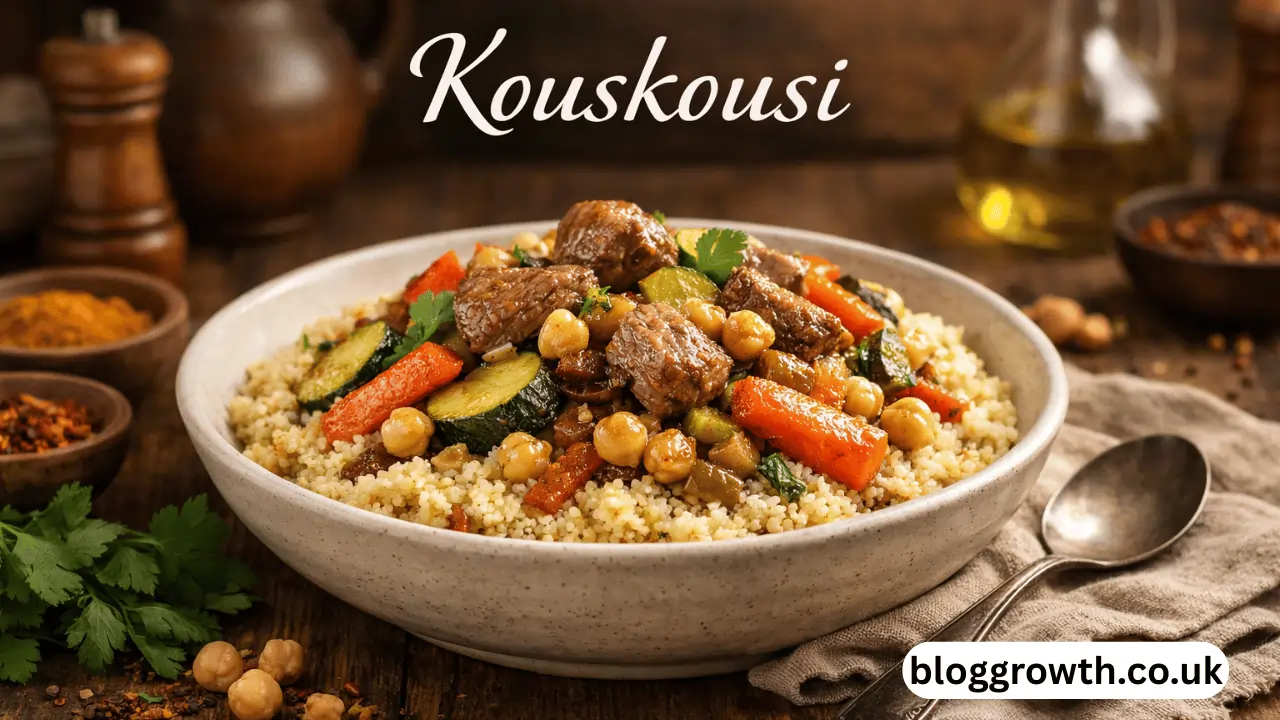
Introduction
Kouskousi is one of those foods that looks simple but carries a rich story behind it. Many people confuse it with grains like rice or quinoa, but in reality, it is a type of pasta with deep cultural roots and growing global appeal. Whether you are exploring new foods or looking for something quick and versatile to cook, kouskousi is worth understanding in detail.
This article explains everything you need to know about kouskousi, from its meaning and history to its types, uses, and nutritional value.
What is Kouskousi?
Kouskousi is a small, round, semolina-based pasta made from durum wheat. It is often mistaken for a grain because of its tiny size, but technically it belongs to the pasta family. The grains are created by rolling semolina with water until small pellets are formed and then drying them.
When cooked, kouskousi becomes soft and fluffy with a slightly chewy texture. Its mild taste allows it to absorb flavors from spices, sauces, and broths, making it suitable for many different dishes.
Origin and Cultural Importance of Kouskousi
Kouskousi has its origins in North Africa, particularly among Berber communities. It has been a staple food for centuries in countries such as Morocco, Algeria, Tunisia, and Libya. Traditionally, families prepared it by hand and steamed it over slow-cooked stews.
Why Kouskousi Matters in Culture
In many North African households, kouskousi is more than just food. It represents tradition, family bonding, and hospitality. It is often served during:
- Family gatherings
- Religious occasions
- Special celebrations
Sharing a large dish of kouskousi is seen as a way to bring people together, which adds emotional value to the meal.
Kouskousi vs Couscous
Many people wonder if kouskousi and couscous are different. In most cases, they refer to the same type of food, but the usage of the word can vary depending on region and culture.
Key Differences in Usage
- Couscous is the globally recognized term
- Kouskousi may be used in certain regions or cuisines
- In some traditions, kouskousi refers to slightly larger pasta grains used in soups
Despite these small differences, both terms describe a semolina-based food that is cooked and served in similar ways.
Types of Kouskousi
Kouskousi comes in different sizes and forms, each with its own texture and culinary use.
Moroccan Kouskousi
This is the smallest and most commonly used type. It cooks quickly and has a light, fluffy texture.
Israeli or Pearl Kouskousi
This type is larger and rounder. It has a slightly chewy texture and is often used in salads or modern dishes.
Lebanese Kouskousi
This is bigger than pearl varieties and is usually used in hearty meals or slow-cooked recipes.
Greek-Style Kouskousi
Often used in soups, this version resembles small pasta shapes and adds thickness to broths.
Each type offers a slightly different cooking experience, allowing flexibility in recipes.
Taste, Texture, and Uses of Kouskousi
One of the main reasons kouskousi is popular is because of its versatility. It works well in both simple and complex recipes.
Taste and Texture
- Mild and neutral flavor
- Soft and fluffy when cooked
- Slightly chewy depending on size
Common Uses
Kouskousi can be used in many ways, including:
- As a side dish with vegetables or meat
- In salads mixed with herbs and dressing
- In soups and stews for added texture
- As a base for sauces and gravies
Because it absorbs flavors easily, it pairs well with spices, herbs, and different cuisines.
Nutritional Value of Kouskousi
Kouskousi provides a balanced source of energy and can be part of a healthy diet when eaten in moderation.
Nutritional Highlights
- Rich in carbohydrates for energy
- Contains moderate protein
- Provides some fiber
- Made from wheat, so it contains gluten
It is often combined with vegetables, beans, or meat to create a more complete and nutritious meal.
How to Cook Kouskousi Properly
Cooking kouskousi is simple and quick, which makes it a convenient option for daily meals.
Basic Cooking Method
- Boil water or broth
- Add kouskousi to the hot liquid
- Cover and let it sit for a few minutes
- Fluff with a fork before serving
Using broth instead of water can enhance the flavor. You can also add spices or a small amount of oil to improve the taste.
Why Kouskousi is Becoming Popular
Kouskousi is gaining popularity in modern kitchens around the world due to its convenience and adaptability.
Reasons Behind Its Growth
- Quick cooking time
- Easy to prepare
- Works with different cuisines
- Affordable and widely available
As people look for simple yet satisfying meal options, kouskousi continues to stand out as a practical choice.
Conclusion
Kouskousi is a unique and versatile food that combines tradition with convenience. Its rich history, simple preparation, and ability to adapt to different flavors make it a valuable ingredient in any kitchen.
Whether you are trying it for the first time or already enjoy it regularly, kouskousi offers endless possibilities for creating delicious meals. Its growing popularity shows that even the simplest foods can have a lasting impact.
FAQs About Kouskousi
1. What is kouskousi made from?
Kouskousi is made from semolina, which comes from durum wheat and is shaped into small pasta granules.
2. Is kouskousi the same as couscous?
Yes, in most cases they are the same, although the term kouskousi may be used differently in some regions.
3. Is kouskousi healthy?
Kouskousi provides energy, some protein, and can be part of a balanced diet when combined with other nutritious foods.
4. How long does it take to cook kouskousi?
It usually takes around 5 to 10 minutes, making it a quick meal option.
5. Can kouskousi be used in different dishes?
Yes, kouskousi can be used in salads, soups, side dishes, and main meals depending on how it is prepared.
You May Also Read: Neatlanta: Meaning, Trends, and Future of Modern Urban Life