









Introduction
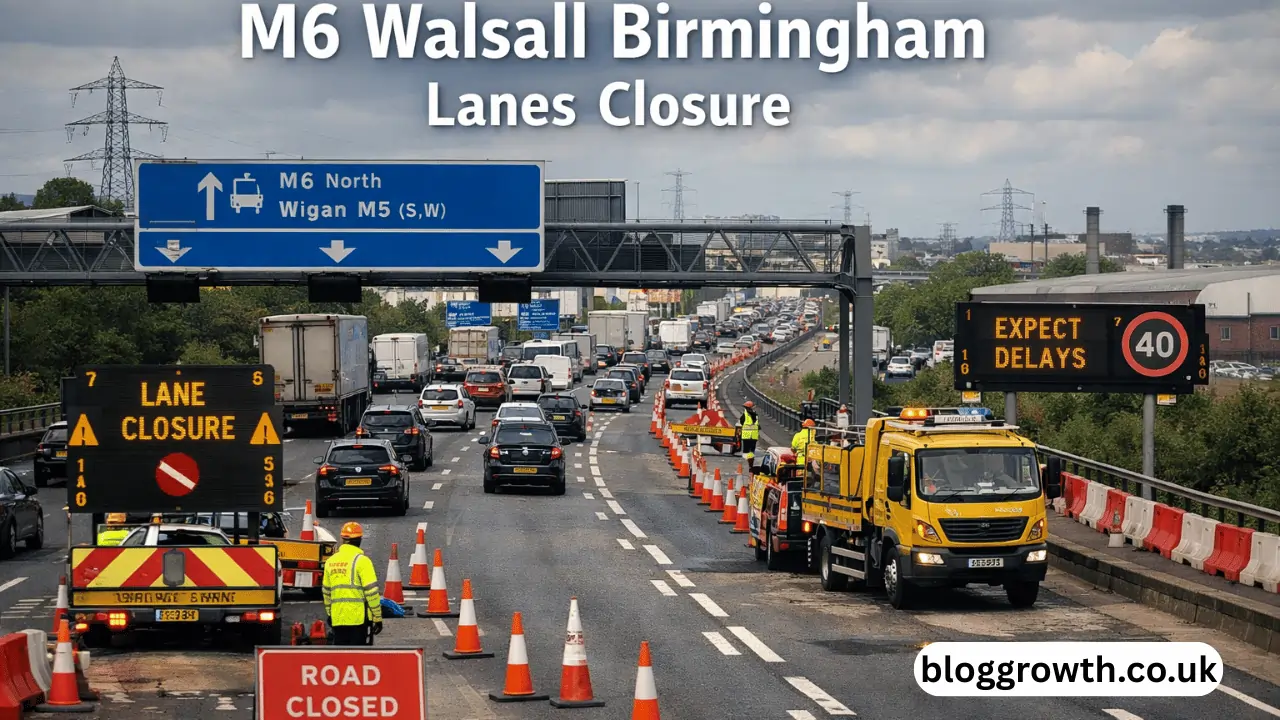
The m6 walsall birmingham lanes closure has become a daily talking point for drivers across the West Midlands. This key motorway route connects major urban and industrial areas, which means even minor disruptions can quickly lead to serious delays.
In 2026, ongoing maintenance, upgrades, and repair work have made this stretch of the M6 particularly challenging for commuters. Understanding the reasons behind these closures, their impact, and how to deal with them can make a real difference for anyone using this route.
Overview of the M6 Walsall Birmingham Lanes Closure
The m6 walsall birmingham lanes closure mainly affects the stretch between Junction 10A near Walsall and Junction 7 heading toward Birmingham. Additional disruptions have also been reported around Junctions 5 and 6, which are already known for heavy traffic.
This motorway section handles a large volume of daily traffic, including commuters, logistics vehicles, and long-distance travelers. Because of this, even a single lane closure can slow things down significantly.
Closures are being carried out in phases. Some are scheduled overnight to reduce disruption, while others extend into daytime hours depending on the nature of the work.
Key Areas Affected by Lane Closures
Junction 10A to Junction 10
This area is a major connection point between the M6 and the M54. Lane restrictions here often cause queues that build up quickly, especially during peak hours.
Junction 7 to Junction 6
As drivers move closer to Birmingham, traffic density increases. Any lane closure in this stretch can lead to severe congestion.
Junction 5 and Junction 6
These junctions are critical due to their proximity to central Birmingham. Roadworks and maintenance in this area often result in slower-moving traffic throughout the day.
Why the M6 Walsall Birmingham Lanes Closure Is Happening
There are several reasons behind the m6 walsall birmingham lanes closure, and most of them are necessary for long-term improvements.
Road Surface Repairs
The M6 carries a high number of heavy vehicles, which leads to faster wear and tear. Regular resurfacing is needed to keep the road safe and smooth.
Infrastructure Maintenance
Bridges, flyovers, and other structures along this route require routine inspections and repairs. This often means lane restrictions or temporary closures.
Smart Motorway Upgrades
Technology upgrades are being introduced to improve traffic flow and safety. Installing these systems requires ongoing construction work.
Emergency Repairs
Unexpected incidents such as accidents or weather-related damage can also result in sudden lane closures.
Timeline of Ongoing Works in 2026
The m6 walsall birmingham lanes closure is not a one-time event but part of a broader schedule of improvements.
- Early 2026: Bridge maintenance work near Junctions 5 and 6
- March 2026: Temporary full closures between Junction 10 and Junction 7
- Spring 2026: Resurfacing and upgrade work across multiple sections
Drivers should expect continued disruption as work progresses in different phases throughout the year.
Traffic Impact and Daily Delays
One of the biggest challenges caused by the m6 walsall birmingham lanes closure is heavy congestion.
During peak travel times, delays can easily reach 30 to 60 minutes. Traffic often begins to slow down miles before the actual closure point.
The impact also spreads beyond the M6. Nearby motorways like the M5 and M42, along with local Birmingham roads, experience increased traffic as drivers look for alternative routes.
This creates a wider network of delays, making travel across the region more difficult.
Economic Effects on Businesses and Commuters
The m6 walsall birmingham lanes closure is affecting more than just travel times.
Business Disruptions
Delayed deliveries can impact supply chains, especially for companies that rely on just-in-time logistics. Increased travel time also means higher fuel costs.
Commuter Challenges
Longer journeys can affect productivity and daily routines. Spending extra time in traffic adds stress and reduces personal time.
Local Economy Impact
Businesses located near affected areas may see fewer customers if people choose to avoid congested routes.
Environmental Impact of Increased Traffic
Traffic congestion caused by the m6 walsall birmingham lanes closure has environmental consequences as well.
Vehicles stuck in traffic produce more emissions, which contributes to air pollution. This is especially concerning in busy urban areas like Birmingham, where air quality is already under pressure.
Higher fuel consumption also increases overall carbon output, making congestion a broader environmental issue.
Practical Tips to Avoid M6 Delays
Drivers can take a few simple steps to reduce the impact of the m6 walsall birmingham lanes closure on their journeys.
Plan Your Journey
Check traffic updates before leaving to avoid unexpected delays.
Travel Outside Peak Hours
If possible, avoid early morning and evening rush hours.
Use Alternative Routes
Consider using the M5 or M42 depending on your destination.
Allow Extra Time
Adding extra time to your journey can reduce stress and help you stay on schedule.
Long-Term Benefits of the Roadworks
Although the current situation is frustrating, the m6 walsall birmingham lanes closure is part of a long-term plan to improve road conditions.
Once completed, these upgrades are expected to provide smoother traffic flow, better safety, and more reliable travel times. Improved infrastructure will also support the growing number of vehicles using this route.
Conclusion
The m6 walsall birmingham lanes closure is a major issue for drivers across the West Midlands, but it is also a necessary step toward improving one of the UK’s busiest motorways.
While delays and disruptions are unavoidable in the short term, the long-term benefits will make travel safer and more efficient. Staying informed and planning ahead can help drivers manage the situation more effectively.
FAQs
1. What is the reason behind the m6 walsall birmingham lanes closure?
The closures are mainly due to maintenance work, infrastructure repairs, and motorway upgrades.
2. Which parts of the M6 are most affected?
The most affected areas include Junctions 10A to 7 and sections near Junctions 5 and 6.
3. How long will the closures continue?
Work is ongoing throughout 2026, with closures happening in different phases.
4. How much delay should drivers expect?
Drivers may experience delays of 30 to 60 minutes during peak hours.
5. Are there ways to avoid the traffic?
Yes, drivers can use alternative routes like the M5 or M42 and avoid peak travel times.
You May Also Read: Yürkiyr: Meaning, Origin and Its Impact on Digital Growth