








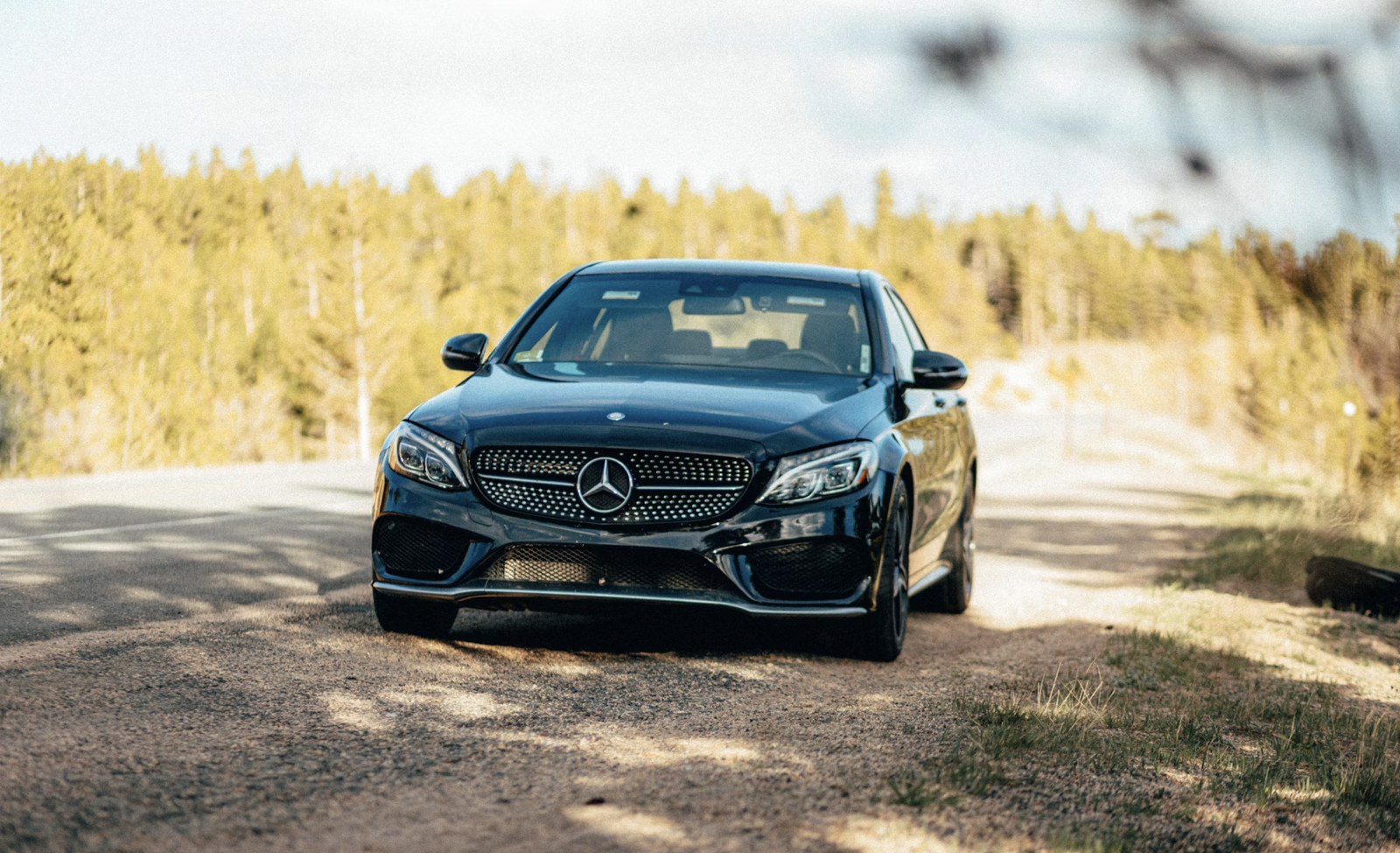
On longer summer trips, Mercedes-Benz drivers often expect lower fuel consumption than in the cold season. This is because in the summer, the car engine warms up faster and maintains operating temperature more easily. Summer tyres also have a positive effect on fuel consumption, improving car rolling and reducing road surface resistance. Nevertheless, PartEvo specialists note that in some cases, in the summer, the opposite trend occurs: fuel consumption unexpectedly increases and is higher than usual for the season. According to experts, this may indicate that the car has hidden problems, and increased fuel consumption is just one symptom.
The engine is not always to blame
When a car consumes more fuel during a trip, a frequent driver immediately rushes to blame the engine, but it is certainly not always to blame. A great example of such a situation is the filters, which, although not considered a direct part of the engine, have a significant impact on its operation. During the summer, when driving a car in the country, air filters can easily become contaminated with dust, thereby reducing their air permeability. Receiving less air, the engine tries to compensate for the power loss and consumes more fuel, further increasing fuel consumption. Thus, sometimes the problem is solved quite simply, despite the fact that at first glance it may seem serious.
A similar situation exists with fuel filters. Over time, they become clogged with small foreign particles found in both gasoline and diesel. Reduced fuel flow can negatively affect the car’s fuel consumption. In any case, it is recommended to replace both the air filter and the air filter in Mercedes-Benz cars regularly to ensure the engine operates not only more economically, but also more smoothly and for longer.
Of course, PartEvo specialists say that Mercedes-Benz drivers should not always choose original Mercedes-Benz parts, as they are quite expensive. For example, air or fuel filters supplied by other manufacturers for cars of this brand are not only cheaper, but usually of the same quality, so it is worth choosing a cheaper alternative.

What slows down the car without you noticing
Speaking of Mercedes’s higher fuel consumption on longer trips, it is also worth noting that certain brake system failures have occurred. Experts say that a failing brake system can make it harder for the car to coast even when the driver does not touch the brake pedal. Pads rubbing against curved or already worn brake discs can create resistance, which causes the car to slow down faster, and in an attempt to compensate for the loss, the driver unconsciously presses the accelerator pedal harder.
Such a situation occurs quite often. It is important to note that drivers do not always feel this, since the change in the car’s ride may be minimal. Nevertheless, even a small amount of extraneous friction in the brake system can inevitably and obviously increase fuel consumption significantly. Specialists urge you to check the brake system if you notice increased fuel consumption, and to replace worn brake pads or discs. Of course, the wearing components of the brake system are also often worth replacing with non-original parts. Currently, there are a number of excellent, high-quality parts on the market that are not only durable but also cheaper than their original versions. It is important that manufacturers of non-original parts are known and that their products are valued in the market as excellent alternatives to original car parts.
To keep your Mercedes running economically, look for parts here: partevo.co.uk/catalog/mercedes-benz-spare-parts